

About Us

Engineering Criteria
-
Analytical Design
Advanced Static and Dynamic Calculations -
Field Inspection
Zero Tolerance Application Standards
With Sustainable Energy Solutions We Shape the Future
Our mission
We offer our engineering solutions with the highest quality to ensure sustainable and efficient use of energy.
- Sustainable Energy
- Quality Projects
- Environmental Awareness
Our Vision
To develop environmentally friendly, pioneering projects that shape the future and the industry with renewable energy sources.
- Sectoral Leadership
- Efficient Solutions
- Customer Focus


Our Collaborations and References Check it out.


Our customers
By GMR
Discover the experiences of our business partners who are part of our sustainable success stories.
real Our Success Stories
Each project is a reflection of our passion for engineering. We focus on perfecting every detail with the experience we gain from the field.

Humanis Land-Rooftop Solar Power Plant
Modern rooftop solar power plant project with a capacity of 5,061 kWp.
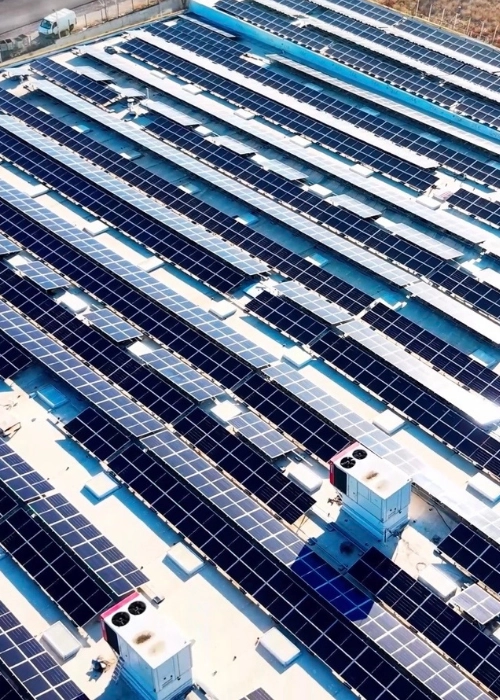

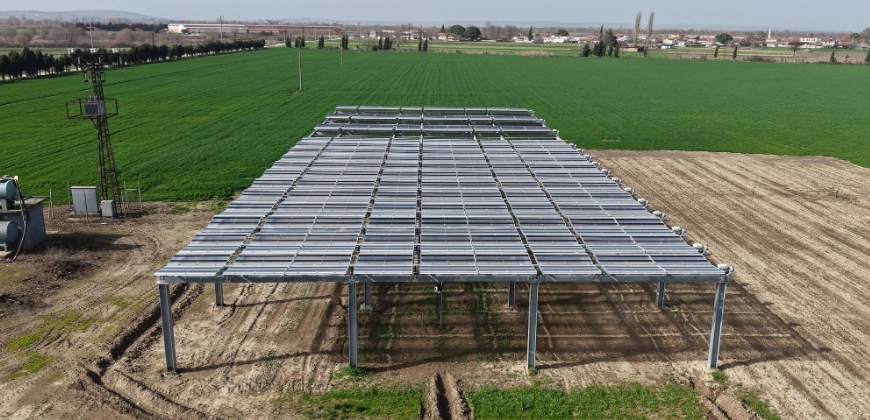
PV4 Plants SPP
Agro PV (Agricultural Solar Power Plant) solar power plant with a capacity of 250 kWp.
Need help? Start here.
As GMR Energy Engineering, we are with you in all processes from solar power plant installation to commissioning. Below you can find the most frequently asked questions.
SPP installation works are not just about panel placement; Many technical conditions must be met, such as roof carrying capacity, land foundation type, sealing details, torque settings and compliance with standards. If one of these criteria is missing, especially in roof or land applications, costs may increase and the warranty and system efficiency of the products used (panels, inverters, etc.) may be at risk.
During field installation, a pull-out test is performed to measure the soil adhesion capacity of the columns; Test results can be visualized in heat map format to model field-wide behavior. In this way, the foundation type is optimized according to the ground conditions: pile length, number, anchorage type (driving, rock, concrete foundation, etc.), which affects both cost and safety. Scope of driving and tensile testing service on the relevant service page You can examine it in detail.
When it comes to corrosion resistance in SPP construction materials, hot dip galvanization (HDG) and Zn-Al-Mg (e.g. Magnelis®) coating options are widely used; but "which one is definitely right?" It is difficult to say because the decision depends on the environmental conditions at the site (e.g. proximity to the seashore, chemical exposure, agricultural/AgroPV sites, etc.). Therefore, the coating type and coating thickness should be selected with expert support, taking into account the corrosion class of the site, ground/atmospheric conditions, maintenance access and cost/benefit balance.
Parameters such as site slope, elevation changes, shading effects and access roads are visualized with 3D terrain modelling; In this way, the amount of excavation-filling, infrastructure road length and installation access are optimized. If modeling is done incorrectly or inadequately, unnecessary excavation-filling operations, material waste and labor increase may occur. In addition, stand placement and column assembly points are planned most accurately according to slope and land conditions; Cable length, inverter and transformer locations are determined according to topographic data, so that unexpected extra costs are not encountered during application.
These simulation-analysis methods (Computational Fluid Dynamics – CFD and Finite Element Analysis – FEA) increase safety and provide material and cross-section optimization by predicting how the assembly system will behave under wind, load and deformation conditions. In addition to the load values specified in the regulations, loads specific to the application area are determined; Thus, the most critical elements of the system are examined in detail and a high level of harmony is achieved between the design criteria by bringing together the loads imposed by the land conditions, regulatory requirements and application requirements. This creates a cost advantage and ensures the durability of the system under extreme conditions.
Engineering Tomorrow's Energy Today.
